This Saturday morning I had the chance to visit the Chinese garden located in Rizal Park, in Manila. It was almost an hour drive from where I live to Manila. I came to discover the Chinese garden in Manila based on the post of my friends in Facebook. Actually, I was hesitant to go to Manila, since I know its going to be a long trip. But I pushed through because I know I won't be at ease if I didn't take the opportunity to go there. I really wanted to see the huge statue of Confucius and the Chinese style garden design of the place.
It was quarter to 9 in the morning when I arrived there. It was a bit hot, because the sun was shining. There is no entrance fee, you just need to log on the record book provided by the staff. Since its Saturday there are a lot of students, and families at the park. The Chinese garden was not that big and you can go around it in less than 5 to 10 minutes. I have read a lot of negative reviews online, but for me the garden is quite nice. Very Chinese. It feels like I'm in China. ha!ha!ha! Even if I know it can never be at par with the famous Suzhou garden in China. I immediately went to the statue of Confucius, and had my photo taken. It was quite huge, and there is a history plaque below the statue. Its about a short bio of Kong Fu Zi (Confucius). I have watched the movie of Chow Yun Fat who portrayed Confucius, and its a good movie. I also love the soundtrack. I also admire Confucius. I have a Chinese philosophy book, and the life of the great master Kong is included there.
Also, the last week of September is where the world, and the Chinese people commemorate the birthday of Confucius. According to Wikipedia, "Confucius birthday falls on the 27th day of the eight lunar month of the Chinese calendar. It is officially celebrated on Taiwan as 'Teachers Day' on September 28th, and in Hong Kong on the 3rd Sunday of September as 'Confucius Day', though the traditional date is also often observed. While in China, they observe the 'Teachers Day' on September 10."
Here in the Philippines, on the 28th of September 2018, His Excellency Ambassador Zhao Jianhua gave a speech at the Chinese garden at Rizal Park, Manila. Government officials were also present. According, to the speaker, the celebration honors teachers, and promotes Confucian values.
One of my favorite quotes by Confucius, which I shared in my story that was featured in a local Filipino-Chinese magazine goes something like this, "Never tire to study and to teach others."
If you have never been to the Chinese garden, and if you love taking a stroll at the park then you better visit Rizal Park, and the Chinese garden.
"Never be tired of learning, or teaching others." - Confucius
Ipinapakita ang mga post na may etiketa na Confucius. Ipakita ang lahat ng mga post
Sabado, Oktubre 6, 2018
中国花园 Chinese Garden in Manila, Philippines
Mga etiketa:
Ambassador Zhao Jianhua,
Chinese Garden,
Chow Yun Fat,
Confucius,
Luneta,
Manila,
movie,
Philippines,
Rizal Park,
Suzhou,
中国花园
Linggo, Oktubre 18, 2015
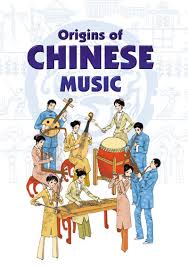
History of Chinese Musical Instruments (excerpts from CCTV9 documentary) Pt.II
This is the continuation
of my blog post. History of the Chinese Musical Instruments. Please do check
out my previous post.
--
Between the years 115-138 B.C Zhang
Qian an explorer of the Western Han
dynasties. Visited various countries in the Westerns region. These visits
resulted in an increase in cultural exchange in various ethnic groups, a number
of foreign instruments were introduced to China. The greatest changes, occurred
in the China’s flutes and Xiao. It
was not until in the Han dynasty that Chinese flutes were played vertically.
Accordng to Mr. Qia Jianzhong, “In the past the Xiao
was also called the flute. Before, the
flute in China was played vertically.”
In the Han Dynasty, Zhang Qian introduced the flutes in the Western regions to China
and they were played horizontally. Flutes that were played vertical were
renamed Xiao. The sounds produced by
the flutes are clear and is pleasant to the ear as the chirping of birds. Both
the Xiao and flute are favorite
musical instruments of Chinese people and both are equally important.
After the downfall of Han
dynasty, China entered a period of incessant wars among various dynasties.
These wars became a catalyst for increased cultural exchange as a result
foreign cultures found their way to China. Gradually, Instruments that are
introduced to the people of China through the silk road become important to the musical life of the country.
Ruanxian is an improved version of Pipa from the Western regions as used in the Han dynasty, it was called the Qing
pipa, but later renamed Ruanxian,
named after a scholar who was skilled in playing it. It is a plucked
stringed-instrument. A Ruanxian has a
round soundbox it also has a straight handle, string bridges, and strings. The
crank-handled Pipa is quite different
from the round Chinese Pipa, and it
is so named because part of its handle is a crank . The Pipa has a pear-shaped soundbox.. The name Pipa suggests how the instruments is played. Pi indicates the strings are plucked inwardly and Pa indicates the strings are plucked
outwardly. Renowned Tang Poet Bai Juyi (wrote an essay telling how a
Pipa is played).
“The large string hum like rain, the small strings whisper like a
secret. The string hummed whispered and then were intermingled like the pouring
of large and small pearls into a plate of jade.”
At first the Pipa was played played horizontally as Bai Juyi wrote she held the Pipa horizontally to hide half of her
face. It took more than a thousand years before it was played vertically as it
is in the stage today. That period lasted from the 7th century in the Tang Dynasty up to the 17 th century
in the Ming dynasty. Today the Pipa has a box and is played with the
hand.
The Pipa was introduced to
Japan from China in the Tang dynasty,
and even today the Japanese used a bug spectrum to play the Pipa. Today, the Pipa was among the well-known Chinese musical instruments.The Konghou originated in West asia and was introduced to China’
through China’s Western regions.The Paiban
was introduced to the Tang dynasty
from today’s Northwest China and all
of these is evident from the openness of Tang
culture towards other culture.Dizi Pa is a kind of vertical flute and is named as 1.8 Zi. Although the instrument
disappeared in China long ago it became a traditional instrument in Japan, as
with all the case of musical instruments in the Tang dynasty.
It is said that over a
thousand years ago a musician of the town imperial palace fled the capital and
made his way to this town in South western in Xian due to war. It is here that he established a musical ensemble to
teach local people imperial music. Incredibly the group is still active today. Most
of them are simple farmers, and after doing their family work they meet
together for practice for performances. Most of the musical instruments were
handed down to them by their forefathers, and their skills in the instruments
were passed on in the same way. It is believed that the musical score in silk that
they keep was produced several hundred years ago during the Ming dynasty.
Li Mingzhong, research fellow
Shaanxi Art Institute says, “Xi’an musicians use up to seven types of
drums. The score of their ensembles
depends on drum beats. So Xian musicians don’t use drums to command music
ensembles as they do in operas Drum beats are use to unite every part of the
ensemble. So drums are very important. Although these types of ancient musical
instruments were once reserved for Imperial use only overtime they gradually
extended to ordinary people.“
Today musician can’t be
seen while accompanying performers in the Peking
Opera. However the music of the opera reveals to the audience how able the
accompanist are as they give expressions equally well as to tragic feelings or a more gentle sentiments
required for the story. Peking Opera doesn’t require a large number of
accompanist. Usually just 7 or 8 musicians playing strings or percussions and
wind instruments are all that was required and this is the result of many years
of experimentation.
This popular band
integrating modern and traditional styles caused a sensation in China, the
members of the band were all women using traditional Chinese instruments to
play contemporary music. (12 Girls Band).
Interestingly the musical instruments in their hands actually didn’t actually
originate in China but over a long period of time became a representative of
Chinese musical instruments.
Older Chinese
people will find playing the erhu in
the way that they played is unacceptable. The erhu is usually played in a certain manner and context. The erhu is as important to the Chinese as
violin is to the Europeans. However many Chinese people don’t know that the erhu is not an original Chinese musical
instrument.
Qian Jianzhong says, “We didn’t have this kind of instrument in
China. Furthermore, until the xiqin appeared during the Tang Dynasty. There
were no records about the xiqin until the Song dynasty at which time it was
renamed the erhu fiddle. So the erhu fiddle is a product o fthe integration of
Chinese and foreign cultures. “
The erhu mainly consists of a bow and
a two strings. But it went through a number of transformations before
maturing in the Yuan dynasty to come to the instruments we know today. The
result was a bowed string instrument. This kind of instrument was kinda new to
China. This instrument was used to accompany the opera, song and dance
performances and is an ensemble instrument used in various traditional music
groups. According to Qian Jianzhong the erhu’s tension is in its middle. The pitch isn’t very high so the erhu fiddle is sounds quite mellow.
Eventually the erhu ousted the pipa as the leading instrument in the Tang dynasty.
Qian also mentioned, “The pipa has nodes. When the strings are plucked
at, these nodes are produced. It also has strings and other things but it
produces its sound mainly through the
points. When it is played the erhu fiddle makes a fine sound. When it is played
slowly it makes a long continuous sound. In addition the erhu can mimic the
sound of the human voice. When it Is played the erhu most often sounds like
singing. This is also true of performances given by Liu Tianhua whose erhu fiddle was
a good singer. The pipa cant do that as it makes sounds through its
frets not lines. Which makes it different from the erhu fiddle.”
After the Ming and Qing dynasties variations on the erhu have emerged in China including the gaohu,banhu and jinghu
and in this way the erhu came to
dominate Chinese folk musical instruments.
Thanks to the effort of
Chinese musicians by the period of 1000
years. 4 types of instruments have
come to dominate Chinese music.
String instruments were represented by the erhu, jinhu and gaohu.
Plucked instruments were represented by qin and pipa.
Wind instruments were represented by the flute, xiao, sheng, and suona.
And percussions instruments were represented by tanggu, tonggu and bo.
However in Europe in
the middle ages things were quite different, by that time larger ensembles were
beginning to take shape and larger number of musical instruments were being
used producing increasingly complicated music. Modern symphonic music
originated to devoted to the glory of God and as such was often more passionate
and dramatic.
Traditional Chinese
music continues to progress along a Chinese style path. Ancient Xun
makes music that takes you back to the remote past. The Pipa is used produce music that can give expression to a beautiful
scenery of a moonlit river on a beautiful spring. The Erhu excels when it comes to portraying people’s sadness and
worries.
These musical
instruments made of different materials producing different timbres worked together to give expressions to
the unique traditional Chinese culture.Ancient Chinese
scholars officials have their own aesthetic taste. The Qin which has a history of a thousand years was a symbol of life
for the high people of society. All emperor’s high ranking officials and
scholars of the Song and Yuan dynasty right up to the Ming and Qing dynasties took delight in music produce on the Qin.Different kinds of
ancient Qin have survived to the
present day some of them were handed down from generation after generation
within a single family while others, once assets of the Imperial palace. Yet o are
no longer regarded as ordinary musical instruments having become precious art
objects in their own rights.
Even today the ancient
Qin is still used to produce music
that gives expression to ancient Chinese culture and traditions. And it has
that unique character that enables it both to express melancholy and nobility.
Today many modern
Chinese find in a world full of frantic activity, the sound of Qin can bring peace and tranquillity.
---
Source:
New Frontiers International documentary CCTV 9.
Mga etiketa:
Amy Tan,
CCTV9,
China,
Chinese Music,
Confucius,
documentary,
drums,
Erhu,
Han,
history,
Instruments,
Ming,
New Frontiers International,
part II,
Pipa,
Qin,
Tang dynasty
History of Chinese Musical Instruments (excerpts from CCTV9 documentary) Part I
As a Chinese studies enthusiast, I also do appreciate
Chinese music whether it be classical or contemporary. I also wish that someday
I’ll be able to learn how to play a Chinese musical instrument. With regards to
Chinese contemporary music I like the music of Wang Lee Hom, and Jay Chou (Zhou
Jie Lun). I also know the 12 girls band, who plays the Chinese
classical instruments and integrates them to modern music. I also recommend the
movie, Love in Disguise starring Wang Lee Hom and Liu Yi Fei, while it is mainly a love story, it also shows the
importance of the Chinese classical music.
This blog post of mine is about the history of Chinese
musical instruments, and their importance to the Chinese people, and their
integral part in the culture of the Chinese. Furthermore, I hope that you will
also be able to appreciate the beauty of the Chinese musical instruments. Below
is my transcription (I edited some parts but they still convey the same
thoughts from the narrator or speaker) taken from the documentary presented by
the CCTV 9, shown in YouTube channel. I did this mainly for
educational purposes, and I do not intend to abuse the copyright, or
plagiarized someone’s work. The host of the New
Frontiers International is Mr. Ji
Xiaojun and is narrated by Su Yang.
---
History of Chinese Musical Instruments
Ancient Chinese regarded music as holy and pure and
believes that it purifies one’s thinking.
The harmonious combination of musical sounds was made by
instruments that fell into 8 categories
Namely metal, stone, clay, wood, bamboo,
string, gourd, and leather. The sounds that the instruments produce
gave expressions to the soul of Chinese people.
There is a traditional music revival in China. Maybe one
reason is that the old Chinese instruments look quaint to foreigners. Musicians
in ancient China use musical instruments that were quite different from now.Many
musical instruments are excavated as far
dates back as the Neolithic age.
One instrument is called Xun. You make it by shaping the clay and you baking it. A Xun has at most six holes on it. That
was the best Xun the ancient Chinese
had. They have 10 holes now, Xun.The sound is melancholy sad, still a Xun creates a unique artistic feeling.They produce sounds of clay. They produce inspiring
sounds that no instruments can produce.
Liu Kuanren, President China Xun Culture Society says that, “Tough conditions in primitive society people have to compete for
survival. They express emotions in many variety of ways. First form was
singing. Then they use clay, vines, bamboo and stones. These gave rise to
musical instruments. People who are still living in a tribal society uses musical
instruments that are ancient and stretches back to the Neolithic age
(primitive).”
Another instrument is the whistle, this bone
whistle is regarded as a musical instrument but in ancient time must be
used as a communication between hunters.
Next is, Pottery bell, when they sway
bells produce a sound that is clear and pleasant to the ear. While, Drums have bodies made of pottery
covered with animal skin. All of these are ancient musical instruments of
China. Another is chime stones, it is
also a Chinese musical instruments but originated from a simple farm tool. The chimes
resembles ancient stone plough and hoes, was actually designed for a stick. The
round whole by which a chime stone is hung
According to Ying Youqin, President of China’s Museum of Oriental Musical Instruments, “When
chime stones were fiund to be able to produce pleasant sound they gradually
became musical instruments. The ancient musical instruments has five notes are Gong, Shang, Jue , Zhi, and Yu.”
They are the equivalent
of the do, re, mi, in Western music.
According to Qian Jianzhong, former director of the music institute of China Art Academy. “The
Chinese mainly use five of the notes partly because they used five elements to
explain the origin of the world. Metal, wood, water, fire and earth or east
west north south and middle. So the
Chinese have five notes. Generally speaking we mainly use five of the seven
notes. That’s a rule. Two of the notes are secondary and the other five are
primary.”
This rule is in line with
the traditional, intellectual and cultural aspirations of Chinese people with
gentleness and tranquillity. Because of the use of these five notes the Chinese
traditional musical instruments were able to produce elegant music without
drastic rises of falls and pitch.
The earliest musical
instruments were quite rudimentary. By the time of Zhou dynasty as many as 70 different instruments were commonly
played. 8th century bc, the golden age. Confucius himself would later say that playing an instrument was an
important indicator of once moral standard. Many did not know that Confucius
was a musician.
Overtime the number of
musical instruments increased and they produce more objective sounds.
In the 8th
Century, Spring, and Autumn, and the Warring state war period. Musical
instruments developed rapidly in this period. According to Wang Peng, Qin Manufacturer.
“At first the Qin had five strings. Shun
a legendary sage monarch enjoyed making five-stringed plucked instruments based
on the notion of the 5 elements, metal, wood, water, fire and earth. Later when
King Wu of Zhou attacked King Zhou of Shang he added the E string to the
instrument to boost the morale of his troops. When King Wen of Zhou added a string
in commemoration of his son, the Qin gained its seventh string.”
As time passed the shape
of the Qin instrument becomes more
complex. The Qin can take many shapes
to accommodate its sound and rationality. For example there are Qins shaped like a banana leaf. Sunset
cloud-shaped Qins were produced on
the basis of imagined clouds.
The Qin is one of China’s most important instruments. One of the
requirements in playing the Qin was
to have good manners. In ancient China, Qin’s
were reserved for scholars before playing the Qin the musician was required to take a bow, and in playing the instrument the player was
to remain solemn and quiet. The Qin
is meant to rid those who play it of evil thoughts and help them cultivate the
mind and develop character.
The ancient city of Wuhan. Has a story about Yu Buoya he was an official who lived
in the State of Jin during the Spring and Autumn period. He was superb
at playing the Qin. Music brought him
and a woodcutter named Zhong Ziqi
together. The two are very best friends.When Yu’s friend died it was told that he broke his Qin and never played again.
In May 1978 excavation in
Hubei province was undertaken. The tomb’s occupant was a 5th century king,Zeng
Hou Yi. A set of chime bells was discovered. The 65 chime bells weigh 5
tons. The sounds of the chime bells allow us to appreciate the sound of the
ancient past.
According to Feng Guangsheng,
VP Hubei Art Vocational Institute.” The
bells unearther in Zeng Hou Yi’s tomb
produced transparent sounds like drops of water, and the sounds lingered,
amazing all of us present. It was wonderful. Theoretically, the bells can
produce monophonic or polyphonic sounds (simple or several sounds).”
The chime bells were
designed to demonstrate the grandeur of the palace. The bells produce a very
wide range of sound. They cover five octaves. The bass bells produced a
soul-stirring sound. This chime bells
also proved that the ancient Chinese can produce high quality bronze. They were
manufactured by 3 metals, bronze, tin and lead. Mixed in a proper ration. According
to Chen Zhongxing, a research fellow,
the proportion of tin, lead and bronze in the composition of bells was strictly
calculated. So the bells have the best possible pitch tone and color.
Chime bells were not the
only instruments found in Zeng’s
tomb. There were also chimes made of stones, a giant drum, and more musical
instruments, pan pipes as well as bamboo flutes. The chamber also contains
sacrificial vessels, and an array of table ware. Laid on, as if a banquet was about
to take place. This was in fact the king’s music center. We gain an idea of how
ancient Chinese music was performed. There were also lighter instruments found.
There are over 128 musical instruments in Zeng
Ho Yi’s tomb. It is believed there are at least 41 musicians needed to play
all these instruments. It is apparent that Zeng
Ho Yi was also a skilled musician himself.
The finest are the chime
bells among all the musical instruments in Zeng Ho Yi’s tomb. They were
predominant in the music of China.
---
Source:
New Frontiers International documentary CCTV 9.
Mga etiketa:
CCTV9,
China,
Chinese Music,
Confucius,
documentary,
drums,
Erhu,
Han,
history,
Instruments,
Ming,
New Frontiers International,
Pipa,
Qin,
Tang dynasty
Sabado, Hunyo 21, 2014
Studying Chinese at Confucius Institute in Ateneo de Manila University
"If Spain has their Instituto Cervantes and Germany has their Goethe
Institut, and France has their Alliance Francaise, China has Confucius
Institute."
I just finished my Basic Chinese 2 course at Confucius Institute in Ateneo de Manila University last week, June 14, 2014. It was my first time to take HSK test, it stands for Hanyu Shuiping Kaoshi or Chinese Proficiency test for non-native speakers. I just got a fair score in this exam. My score is 31/40. My classmates got a high score, and some even got a near perfect score, only one mistake. I was heartbroken because I scored low, but that's not a reason for me to give up. Anyway, I'm glad that I was able to finish the course and get another certificate in Chinese language study. My first certificate was when I studied Basic Chinese at Languages Internationale in Katipunan, Quezon City during my college days.
I was a former ESL (English as Second Language) teacher to Koreans. Compared with the Korean language, Chinese language is not that easy to learn, it can be in fact quite challenging. Mandarin has four tones and from what I read Chinese characters are over 80,000 but not all of them are used today. In the year 2000 that was my first attempt to study Chinese. Even if my family/relatives think its useless to study Chinese I was really persistent. When I was in my junior and senior year in college, I took Basic Mandarin I and Basic Mandarin II as my foreign language. After 14 years, finally I finished another Chinese language course in Confucius Institute based in Ateneo de Manila University.
Confucius Institute has three headquarters or branches here in the Philippines. Aside from Ateneo de Manila, it is also found in Angeles University Foundation and Bulacan State University. Confucius Institute has helped a lot of people from all over the world who wants to study Chinese, as well as learning more about Chinese language and culture. As you can see, Confucius Institute was named after the great Chinese philosopher, Kong Fu Zi (Master Kong). My blog 'quotes', one of Confucius famous saying about learning and teaching. The mission of Confucius Institute is to promote and teach Chinese culture and language all over the globe. This is also one way to promote harmonious relationship with the two countries.
So to all Chinese studies language and enthusiasts like me, if you want to study Chinese as a hobby or to further develop your skill and knowledge with regards to Chinese culture then check out Confucius Institute at Ateneo de Manila, (they also have a Makati branch) and if your are in the province (Pampanga and Bulacan), check out the other two universities offering Chinese language. Like what my former Chinese teacher always says to me 加油 jia you! (cheer or encouragement in Chinese mandarin) it means go!go!go! or go for it!
Mga etiketa:
Alliance Francaise,
Angeles University,
Basic Mandarin,
Centro Escolar University,
Confucius,
Confucius Institute,
ESL,
Goethe Institut,
HSK,
Instituto Cervantes,
Languages Internationale
Sabado, Abril 5, 2014
Back to School at Confucius Institute in Ateneo
Today was my first day of class in Ateneo. I enrolled in Basic Chinese 2. My interest in studying Chinese was put on hold for a decade. I was still in my college days when I studied Chinese in my college university, Centro Escolar University and I took it as a summer course in Languages Internationale.
It felt good to be back in school again after a year of not stepping on any school grounds. It was just last year when I finished my Master's degree course in Miriam College, and now I'm back again in Katipunan, and this time in Ateneo.
My brain was in a state of shock this morning because after we recited the pinyin, b, p, m, f, etc. We proceeded to counting numbers, and it was not just 1 to 10 but up to 100. It's a good thing I still know how to count in Chinese. After that we learned some vocabulary words with regards to food and drinks. We were also made to recite a tongue twister, 'si shi si', to brush up on our knowledge with regards to the tones. Our professor also taught us the Chinese names for the 12 animals. I must admit I'm also having a hard time with the tonal system of Mandarin. From what I know Mandarin language uses four tones, I guess I should be thankful because in Cantonese its maybe 6 or 7. My classmates also have their textbook with them. I don't have a textbook because I was not aware of what we are going to use. Some of my classmates know each other already because, they have attended the Basic Chinese 1. The textbook that they've used before, they will also use in Basic Chinese 2. We had a lot of fun in our class. I even made a blooper because instead of saying, 'Wo xihuan chi dangao'. (cake), I've said 'dongao', I'm looking forward already for our class next week. After our class I bought the book, and I inquired about my school I.D., according to the staff, Ms.Airen it is not yet finished. I saw that our book was from Beijing Language Cultural University press, wow! That school is really famous for those who want to learn Chinese, I know its impossible for me to study there. Also, the tuition fee is quite pricey. So I'm just contented with the book for now.
I was pondering while in the classroom, if I should transfer to Basic Chinese 1. I made up my mind that I'll just stay in our class because its a good challenge for me. Besides, I've already studied Chinese before. We are 12 in our class. We have 3 boys and the rest are girls. One of my guy classmate who's older than the rest of us was really funny, his answers were really funny, so we cracked up with laughter. Our laoshi's name is Ms. Maria Joanna Tecson, and her Chinese surname is Chua. She said that she also teaches in Chiang Kai Shek college in Manila. I find her nice and cute.
Confucius Institute according to Wikipedia is:
a non-profit public institutions aligned with the Government of the People's Republic of China that aim to promote Chinese language and culture, support local Chinese teaching internationally, and facilitate cultural exchanges.
Confucius Institutes are sometimes compared to language and culture promotion organizations such as Britain's British Council, France's Alliance Française and Germany's Goethe-Institut.
From what I read, the institution promotes the study of Chinese culture, history, language, music (learning how to play traditional Chinese musical instrument, Guzheng), calligraphy, painting, and martial-arts (tai-chi and qigong). The courses offered in Ateneo are limited only. Their music class is available only in their Makati campus, as well as the other courses that were mentioned.
So if you want to de-stress, learn something new or just do what you love to do. Like me, a Chinese studies enthusiast. Then I suggest you enroll in Confucius Institute in Ateneo. Let me end this post by quoting Confucius saying.
"Never be tired of learning, or teaching others." - Confucius
Martes, Marso 25, 2014
Movie Review: Confucius
After a Chinese
fantasy-action film that I’ve seen, I’ve decided to watch a
historical/biographical movie about a famous Chinese figure. I bet everyone
else has heard about the name Confucius. In Chinese, 孔夫子 Kong Fu Zi (means Master
Kung). He’s the pioneer in making education available to all. No wonder a lot
of schools, and institutes were named after him. If you’ve noticed, my blog’s header design was
a saying from Confucius. I’ve decided to put a Chinese saying there, because
the theme of this blog is all about Chinese. At first I really have no idea about
the life story of Confucius. I thought he was a just a philosopher and a wise
teacher.
The character of Confucius
was portrayed by a well-known Chinese action star, Chow Yun Fat. This is the
first time that I’ve seen him play a character, that’s mellow, or someone who
doesn’t fight with others, or someone who does martial arts. It’s refreshing to
see him play a different role.
I wonder why this
movie didn’t make so much noise like the other Hollywood movies. I really liked
the scenery, the costume of the characters, and I like just about everything in
the movie. It has even a nice OST, “Virtues of the Silent Orchid”, sung by Faye
Wong. For a China and Chinese studies enthusiast like me, this movie is a
must-see! You’ll know more about Chinese history, and the period where
Confucius live.
I also typed my favourite
lines from the movie, or statements that has strucked me the most. So it took
me almost half of the day to finish this movie. I also made a drawing, sort of
fan art tribute to one of the world’s greatest teacher. Like in one of my shout-outs
that I’ve posted before in a social network, “If the Greeks have Plato, and
Socrates, so do China. They have Confucius, (and Lao Tzu).” If you haven’t seen
this movie I suggest you watch it now. You will have a better understanding of
China, the man, his life, his works and the legacy that he left behind.
Here are some of my
favourite lines from the movie, and below I've included the music video, and the English translation of the song.
---
My favorite lines from the movie:
Kong Qiu: Minister, benevolence is love towards our fellow men. A ritual
murder is still murder, even if it complies with tradition. Lord Shu, you
showed benevolence towards a pheasant.
Now I ask you, surely you must also speak up for this wounded boy?
The Zhou code of ethics teaches us to value human life above all. The
burial of slaves was practiced in barbarous times. It was outlawed in our
dynasty when the Zhou reign commenced. Our kingdom of Lu is the ancient home of
the Duke of Zhou, known for its ethics. We should think afresh and abandon
outdated traditions.
Gen. Gongshan: It was Lord Ki Pingzi’s
dying wish that those he loved should die with him. It is not cruel to bury this slave. Rather, it demonstrates the
Minister’s filial piety! His love for his father!
Kong Qiu: Gen. GongShan I know you served Lord Pingzi for years. I hear he
said many times that he could not live without you.
Gen. Gongshan: Right, that’s correct.
Kong Qiu: Given how close you were to him, he must still need you now that
he has passed on to the next life. If you were willing to accompany your lord in death, I could not
object to you taking this young slave with you. It seems the Gen. is not willing
to serve his master beyond the grave. He imposes on others what he will not
impose on himself.
Kong Qiu: The poem means, “Even while courting a gentleman observes all
proprieties.”
"The hardness of the task is the measure of the gentleman."
"Poetry, books, ethics, music , a gentleman must understand all these. Rulers should treat ministers with courtesy, ministers serve rulers
with loyalty. Loyalty and filial piety are the keys to humanity and harmony. All professions may prosper. Close to home, attend your parents. Further afield, placate your
neighbours. There is also much to learn, including the names of birds, beasts,
grasses and trees."
“Only in winter does the pine show its true strength.”
"An official wears his robes of office. But it’s his inner character
and spirit which reflect his true mettle."
Virtues of the Silent Orchid ❀ (An Ode to Confucius)
Elegant orchid, standing tall with its fragrance spread
Its aroma faint but worshipped by all other surround flowers
If not picked and worn, what sorrow will it be to the orchid?
For days and years, I have travelled far across the land
One who goes far to search for the talented,
Will benefit himself greatly with wisdom and power
When the orchid is picked and worn,
It becomes alive in spirit and radiates its fresh scent
Even during the winter, when the ground is thick with snow and frost,
The orchids’ buds endure the coldness
The proper conduct of a man virtue,
Is the prosperity of his offspring in generations to come
Elegant orchid, standing tall with its fragrance spread
Its aroma faint but worshipped by all other surround flowers
If not picked and worn, what sorrow will it be to the orchid?
For days and years, I have travelled far across the land
One who goes far to search for the talented,
Will benefit himself greatly with wisdom and power
When the orchid is picked and worn,
It becomes alive in spirit and radiates its fresh scent
Even during the winter, when the ground is thick with snow and frost,
The orchids’ buds endure the coldness
The proper conduct of a man virtue,
Is the prosperity of his offspring in generations to come
Mag-subscribe sa:
Mga Post (Atom)


.jpg)