Ipinapakita ang mga post na may etiketa na Tang dynasty. Ipakita ang lahat ng mga post

Biyernes, Oktubre 23, 2015

Chinese Traditional Houses and Architecture (excerpts from four documentaries) Part II

This is the part II of my post regarding Chinese Traditional Houses and Architecture. Please do check-out my previous post. 

---
In the third documentary I have seen. I’m sure architects or engineers will be interested in this one. It is a summary with regards to building Chinese traditional houses, and the use of timber. This documentary is helpful and an indispensable one with regards to appreciating and knowing more about Chinese architecture.

We are also given a glimpse of the Chinese tradition and  superstitious beliefs when building or constructing a house.

Images from this blog are from Google Images. (Below is a photo of Fujian Tuluo house, and a Chinese scholar's room)
  
Chinese Traditional Architectural Craftsmanship for Timber-Framed Structures (UNESCO)

Traditional Chinese architecture craftsmanship for timber frame structures has its own unique system and characteristic through thousands of years of developing. With so much rich experience accumulated overtime Chinese craftsmen have developed very sound technical methods regarding the choice of building materials types of framework, manufacturing of components, installation and so on which has been handed down from masters through their apprentices through examples and verbal instructions.By employing the architectural craftsmanship various kinds of architectures  such as palaces, temples, gardens, residential houses, and assembly halls cater to the needs of people from all walks of life reflects Chinese people view of the universe  the traditional Chinese hierarchy society as well as interpersonal relationship and demonstrate the wisdom of ancient technology not only are they they the projections of Chinese people’s unique aesthetics but also representatives of ancient oriental  architectural technology.

Timber frame is the core of the structure. There are mainly two types of framework for traditional Chinese timber structure. (Post and lintel structures, column and tie beam structures). The framework consists of wooden structures including columns, beams, curlings and rafters, and brackets sets generally known as structural frame. The tendon joints connecting the wooden components contribute to the flexibility of structure which means it is more earthquake resistant. For instance the 900 year old wooden pagoda (Wooden Pagoda of Buddha Palace)  in Ying (Yingxian) county, remains intact despite of going through many big earthquakes.
                                    
Over 400 years ago or even earlier the ancient Chinese craftsmen discovered the rule concerning architectural modules and worked out the basic modulus unit it was then possible it was then possible for the whole structure to be proportionally built in accordance in strict planning all the component could be manufactured before hand and installed according to the unified working procedures making full use of the materials and greatly improve the production efficiency this method became the essence of ancient architectural technology.

Traditional craftsmen worked on the materials by giving their inherent qualities full consideration to hold their jargon fat timbers for beams and slim for columns which indicates the craftsmen bearing consideration for the load quality of the timber. The wooden component such as the moonshaped beam, tunnel shaped columns an brackets are manufactured not only in the sense that they are beautiful in shape but also emphasize their load bearing quality.


Chinese have always attached great importance to the construction of residential houses. Many rituals have developed in their work and their life overtime there are corresponding rules and rituals during different construction stages when certain activities takes place such as the selection of land, planning, preparing for the construction materials, decision on the date of construction commencing of the construction, completion and house moving etc.

For example,  on important occasions when the foundation is laid. The doors are installed and the beams in position firecrackers would be lit in order to expel ghosts and demons, couplets would be hanged on the door frame for goodluck after the beam is positioned.

In 2007 the Institute for Architectural Studies of Chinese Academy of art carried out a great deal of field work and study in 3 dimensional database for traditional Chinese craftsmanship for safeguarding architectural craftsmanship and traditional architecture. Traditional Chinese craftsmanship can now be studied and recorded with the help of advanced digital multimedia. Today what the ancient craftsman has left with the Chinese is still widely used and surely will be continued to pass on from generation to generation.

-
The last documentary tells of the ancient architecture of China, from the time of China's Emperor Qin Shi Huang up to the glory of the Tang dynasty. 

Journey to the East - Ancient Architecture of China (NTDTV)

The Great Wall of China is an ancient Chinese fortification, built in the warring states period by the different states. The first major wall was 5000 km long, built by Emperor Qin Shi Huang the 1st emperor of Qing dynasty,After he ended the warring states period and unified China. This wall was not constructed by a single endeavour but it was created by joining several walls built earlier by the warring states.

While  building the great wall of Qin Shi Huang also spared no cost his palace complex which was near today at Xian in Xiangxi province, China. The Greatwall, the palace complex, the terracotta soldiers in Qin Shi Huang’s lavish tomb represents  masterpieces of ancient architecture and craftsmanship in China which required enormous manpower and resources.

Wooden structure tile top is a unique structure of Chinese style architecture. Would start with vertical wooden pillars that are connected by horizontal beams. Numerous short columns are hung from the main beam these short columns are used to support roof surfaces. Ancient Chinese could have built an entire house using structure using amortice structure combination without using a single nail. A space between any two columns is called a room. Rooms constitute a single rectangular architecture.

Luo Ban 772 and 481 state of Lu in the Spring and Autumn period, best known inventor and carpenter throughout Chinese history. He invented carpenter’s square, ink marker, lock, grill, ladder and many other tools. He once made a wooden bird that flew in the sky for 3 days legend says, as a result he was revered as originator of carpentry in craftsmanship in ancient China.

The earliest of pottery tiles first appeared Western Chou dynasty about 3000 yrs ago, tiles classified in two. Tube tiles and clay tiles and are often decorated with calligraphy with pattern of clouds and dragons. An unearthed city map of Eastern Han period shows that Han cities contain temples, city walls,gates, alleys, government cities, temples and markets.

Temples are excellent examples of ancient architectures, representative temples include stone caves, palaces and pagodas. Buddhism spread to China during the Eastern Han period since then a large number of stone caves were constructed and many Buddha statues were carved. The famous charter arch bridge in Hubei province China, not only the most ancient  bridge in China but also in the world. It has endured 10 floods, 8 battles, and numerous earthquake. Its foundation is extremely solid.


Tang dynasty is the highest point in Chinese civilization.Huge palaces and complex were built. The empire saw a flourish in creativity. Ancient Chinese craftsman were also able to explore material properties in constructing wooden structures .The Imperial court also issued standared for consistent measurements and drawings.  Imperial family adapted Buddhism and continues to flourish. 

Linggo, Oktubre 18, 2015

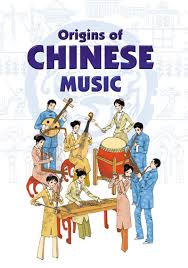
History of Chinese Musical Instruments (excerpts from CCTV9 documentary) Pt.II


This is the continuation of my blog post. History of the Chinese Musical Instruments. Please do check out my previous post.

--

Between the years 115-138 B.C  Zhang Qian an explorer of the Western Han dynasties. Visited various countries in the Westerns region. These visits resulted in an increase in cultural exchange in various ethnic groups, a number of foreign instruments were introduced to China. The greatest changes, occurred in the China’s flutes and Xiao. It was not until in the Han dynasty that Chinese flutes were played vertically.

Accordng to Mr. Qia Jianzhong, “In the past the Xiao was also called the flute. Before, the  flute in China was played vertically.”

In the Han Dynasty, Zhang Qian introduced the flutes in the Western regions to China and they were played horizontally. Flutes that were played vertical were renamed Xiao. The sounds produced by the flutes are clear and is pleasant to the ear as the chirping of birds. Both the Xiao and flute are favorite musical instruments of Chinese people and both are equally important.


After the downfall of Han dynasty, China entered a period of incessant wars among various dynasties. These wars became a catalyst for increased cultural exchange as a result foreign cultures found their way to China. Gradually, Instruments that are introduced to the people of China through the silk road become important to the musical life of the country.  

Ruanxian is an improved version of Pipa from the Western regions as used in the Han dynasty, it was called the Qing pipa, but later renamed Ruanxian, named after a scholar who was skilled in playing it. It is a plucked stringed-instrument. A Ruanxian has a round soundbox it also has a straight handle, string bridges, and strings. The crank-handled Pipa is quite different from the round Chinese Pipa, and it is so named because part of its handle is a crank . The Pipa has a pear-shaped soundbox.. The name Pipa suggests how the instruments is played. Pi indicates the strings are plucked inwardly and Pa indicates the strings are plucked outwardly. Renowned Tang Poet Bai Juyi (wrote an essay telling how a Pipa is played). 

“The large string hum like rain, the small strings whisper like a secret. The string hummed whispered and then were intermingled like the pouring of large and small pearls into a plate of jade.”

At first the Pipa was played played horizontally as Bai Juyi wrote she held the Pipa horizontally to hide half of her face. It took more than a thousand years before it was played vertically as it is in the stage today. That period lasted from the 7th century in the Tang Dynasty up to the 17 th century in the Ming dynasty. Today the Pipa has a box and is played with the hand.

The Pipa was introduced to Japan from China in the Tang dynasty, and even today the Japanese used a bug spectrum to play the Pipa. Today, the Pipa was among the well-known Chinese musical instruments.The Konghou originated in West asia and was introduced to China’ through China’s Western regions.The Paiban was introduced to the Tang dynasty from today’s Northwest China and all of these is evident from the openness of Tang culture towards other culture.Dizi Pa is a kind of vertical flute and is named as 1.8 Zi. Although the instrument disappeared in China long ago it became a traditional instrument in Japan, as with all the case of musical instruments in the Tang dynasty.

It is said that over a thousand years ago a musician of the town imperial palace fled the capital and made his way to this town in South western in Xian due to war. It is here that he established a musical ensemble to teach local people imperial music. Incredibly the group is still active today. Most of them are simple farmers, and after doing their family work they meet together for practice for performances. Most of the musical instruments were handed down to them by their forefathers, and their skills in the instruments were passed on in the same way. It is believed that the musical score in silk that they keep was produced several hundred years ago during the Ming dynasty. 

Li Mingzhong, research fellow Shaanxi Art Institute says, “Xi’an musicians use up to seven types of drums.  The score of their ensembles depends on drum beats. So Xian musicians don’t use drums to command music ensembles as they do in operas Drum beats are use to unite every part of the ensemble. So drums are very important. Although these types of ancient musical instruments were once reserved for Imperial use only overtime they gradually extended to ordinary people.“

Today musician can’t be seen while accompanying performers in the Peking Opera. However the music of the opera reveals to the audience how able the accompanist are as they give expressions equally well as  to tragic feelings or a more gentle sentiments required for the story. Peking Opera doesn’t require a large number of accompanist. Usually just 7 or 8 musicians playing strings or percussions and wind instruments are all that was required and this is the result of many years of experimentation.

This popular band integrating modern and traditional styles caused a sensation in China, the members of the band were all women using traditional Chinese instruments to play contemporary music. (12 Girls Band). Interestingly the musical instruments in their hands actually didn’t actually originate in China but over a long period of time became a representative of Chinese musical instruments.

Older Chinese people will find playing the erhu in the way that they played is unacceptable. The erhu is usually played in a certain manner and context. The erhu is as important to the Chinese as violin is to the Europeans. However many Chinese people don’t know that the erhu is not an original Chinese musical instrument.

 The erhu used to be called the xiqin and is invented by the Xi tribe, during the Sui and Tang dynasties. The Xi was a northern ethnic minority tribe. They invented the two stringed instrument played vertically. 

Qian Jianzhong says, “We didn’t have this kind of instrument in China. Furthermore, until the xiqin appeared during the Tang Dynasty. There were no records about the xiqin until the Song dynasty at which time it was renamed the erhu fiddle. So the erhu fiddle is a product o fthe integration of Chinese and foreign cultures. “

The erhu mainly consists of a bow and  a two strings. But it went through a number of transformations before maturing in the Yuan dynasty to come to the instruments we know today. The result was a bowed string instrument. This kind of instrument was kinda new to China. This instrument was used to accompany the opera, song and dance performances and is an ensemble instrument used in various traditional music groups. According to Qian Jianzhong the erhu’s tension is in its middle. The pitch isn’t very high so the erhu fiddle is sounds quite mellow. Eventually the erhu ousted the pipa as the leading instrument in the Tang dynasty.  


Qian  also mentioned, “The pipa has nodes. When the strings are plucked at, these nodes are produced. It also has strings and other things but it produces its sound mainly  through the points. When it is played the erhu fiddle makes a fine sound. When it is played slowly it makes a long continuous sound. In addition the erhu can mimic the sound of the human voice. When it Is played the erhu most often sounds like singing. This is also true of performances given by Liu Tianhua whose erhu fiddle was  a good singer. The pipa cant do that as it makes sounds through its frets not lines. Which makes it different from the erhu fiddle.”

After the Ming and Qing dynasties variations on the erhu have emerged in China including the gaohu,banhu and jinghu and in this way the erhu came to dominate Chinese folk musical instruments.
Thanks to the effort of Chinese musicians by the period of 1000 years.  4 types of instruments have come to dominate Chinese music.

String instruments were represented by the erhu, jinhu and gaohu.
Plucked instruments were represented by qin and pipa.
Wind instruments were represented by the flute, xiao, sheng, and suona.
And percussions instruments were represented by tanggu, tonggu and bo.

However in Europe in the middle ages things were quite different, by that time larger ensembles were beginning to take shape and larger number of musical instruments were being used producing increasingly complicated music. Modern symphonic music originated to devoted to the glory of God and as such was often more passionate and dramatic.

Traditional Chinese music continues to progress along a Chinese style path.  Ancient Xun makes music that takes you back to the remote past. The Pipa is used produce music that can give expression to a beautiful scenery of a moonlit river on a beautiful spring. The Erhu excels when it comes to portraying people’s sadness and worries.

These musical instruments made of different materials producing different  timbres worked together to give expressions to the unique traditional Chinese culture.Ancient Chinese scholars officials have their own aesthetic taste. The Qin which has a history of a thousand years was a symbol of life for the high people of society. All emperor’s high ranking officials and scholars of the Song and Yuan dynasty right up to the Ming and Qing dynasties took delight in music produce on the Qin.Different kinds of ancient Qin have survived to the present day some of them were handed down from generation after generation within a single family while others,  once assets of the Imperial palace. Yet o are no longer regarded as ordinary musical instruments having become precious art objects in their own rights.

Even today the ancient Qin is still used to produce music that gives expression to ancient Chinese culture and traditions. And it has that unique character that enables it both to express melancholy and nobility.

Today many modern Chinese find in a world full of frantic activity, the sound of Qin can bring peace and tranquillity.


---                                                                                                              
Source: New Frontiers International documentary CCTV 9.


History of Chinese Musical Instruments (excerpts from CCTV9 documentary) Part I

As a Chinese studies enthusiast, I also do appreciate Chinese music whether it be classical or contemporary. I also wish that someday I’ll be able to learn how to play a Chinese musical instrument. With regards to Chinese contemporary music I like the music of Wang Lee Hom, and Jay Chou (Zhou Jie Lun). I also know the 12 girls band, who plays the Chinese classical instruments and integrates them to modern music. I also recommend the movie, Love in Disguise starring Wang Lee Hom and Liu Yi Fei, while it is mainly a love story, it also shows the importance of the Chinese classical music.

This blog post of mine is about the history of Chinese musical instruments, and their importance to the Chinese people, and their integral part in the culture of the Chinese. Furthermore, I hope that you will also be able to appreciate the beauty of the Chinese musical instruments. Below is my transcription (I edited some parts but they still convey the same thoughts from the narrator or speaker) taken from the documentary presented by the CCTV 9, shown in YouTube channel. I did this mainly for educational purposes, and I do not intend to abuse the copyright, or plagiarized someone’s work. The host of the New Frontiers International is Mr. Ji Xiaojun and is narrated by Su Yang.

---                                                                                                  
History of Chinese Musical Instruments

Ancient Chinese regarded music as holy and pure and believes that it purifies one’s thinking.
The harmonious combination of musical sounds was made by instruments that fell into 8 categories
 Namely metal, stone, clay, wood, bamboo, string, gourd, and leather. The sounds that the instruments produce gave expressions to the soul of Chinese people.

There is a traditional music revival in China. Maybe one reason is that the old Chinese instruments look quaint to foreigners. Musicians in ancient China use musical instruments that were quite different from now.Many musical instruments are excavated as far  dates back as the Neolithic age.

One instrument is called Xun. You make it by shaping the clay and you baking it. A Xun has at most six holes on it. That was the best Xun the ancient Chinese had. They have 10 holes now, Xun.The sound is melancholy sad, still a Xun creates a unique artistic feeling.They produce sounds of clay. They produce inspiring sounds that no instruments can produce.

Liu Kuanren, President China Xun Culture Society says that, “Tough conditions in primitive society people have to compete for survival. They express emotions in many variety of ways. First form was singing. Then they use clay, vines, bamboo and stones. These gave rise to musical instruments. People who are still living in a tribal society uses musical instruments that are ancient and stretches back to the Neolithic age (primitive).”

Another instrument is the whistle,  this bone whistle is regarded as a musical instrument but in ancient time must be used as a  communication between hunters. Next is, Pottery bell, when they sway bells produce a sound that is clear and pleasant to the ear. While, Drums have bodies made of pottery covered with animal skin. All of these are ancient musical instruments of China. Another is chime stones,  it is also a Chinese musical instruments but  originated from a simple farm tool. The chimes resembles ancient stone plough and hoes, was actually designed for a stick. The round whole by which a chime stone is hung 

According to Ying Youqin, President of China’s Museum of Oriental Musical Instruments, “When chime stones were fiund to be able to produce pleasant sound they gradually became musical instruments. The ancient musical instruments has five notes are Gong, Shang, Jue , Zhi, and Yu.”
They are the equivalent of the do, re, mi, in Western music.

According to Qian Jianzhong, former director of the music institute of China Art Academy. “The Chinese mainly use five of the notes partly because they used five elements to explain the origin of the world. Metal, wood, water, fire and earth or east west north south and middle.  So the Chinese have five notes. Generally speaking we mainly use five of the seven notes. That’s a rule. Two of the notes are secondary and the other five are primary.”

This rule is in line with the traditional, intellectual and cultural aspirations of Chinese people with gentleness and tranquillity. Because of the use of these five notes the Chinese traditional musical instruments were able to produce elegant music without drastic rises of falls and pitch.

The earliest musical instruments were quite rudimentary. By the time of Zhou dynasty as many as 70 different instruments were commonly played. 8th century bc, the golden age. Confucius himself would later say that playing an instrument was an important indicator of once moral standard. Many did not know that Confucius was a musician.

Overtime the number of musical instruments increased and they produce more objective sounds.
In the 8th Century, Spring, and Autumn, and the Warring state war period. Musical instruments developed rapidly in this period. According to Wang Peng, Qin Manufacturer. “At first the Qin had five strings. Shun a legendary sage monarch enjoyed making five-stringed plucked instruments based on the notion of the 5 elements, metal, wood, water, fire and earth. Later when King Wu of Zhou attacked King Zhou of Shang he added the E string to the instrument to boost the morale of his troops. When King Wen of Zhou added a string in commemoration of his son, the Qin gained its seventh string.”

As time passed the shape of the Qin instrument becomes more complex. The Qin can take many shapes to accommodate its sound and rationality. For example there are Qins shaped like a banana leaf. Sunset cloud-shaped Qins were produced on the basis of imagined clouds. 

The Qin is one of China’s most important instruments. One of the requirements in playing the Qin was to have good manners. In ancient China, Qin’s were reserved for scholars before playing the Qin the musician was required to take a bow,  and in playing the instrument the player was to remain solemn and quiet. The Qin is meant to rid those who play it of evil thoughts and help them cultivate the mind and develop character.

The ancient city of Wuhan. Has a story about Yu Buoya he was an official who lived in the State of Jin during the Spring and Autumn period. He was superb at playing the Qin. Music brought him and a woodcutter named Zhong Ziqi together. The two are very best friends.When Yu’s friend died it was told that he broke his Qin and never played again.

In May 1978 excavation in Hubei province was undertaken. The tomb’s occupant was a 5th century king,Zeng Hou Yi. A set of chime bells was discovered. The 65 chime bells weigh 5 tons. The sounds of the chime bells allow us to appreciate the sound of the ancient past. 

According to Feng Guangsheng, VP Hubei Art Vocational Institute.” The bells unearther in Zeng Hou Yi’s tomb produced transparent sounds like drops of water, and the sounds lingered, amazing all of us present. It was wonderful. Theoretically, the bells can produce monophonic or polyphonic sounds (simple or several sounds).”

The chime bells were designed to demonstrate the grandeur of the palace. The bells produce a very wide range of sound. They cover five octaves. The bass bells produced a soul-stirring sound.  This chime bells also proved that the ancient Chinese can produce high quality bronze. They were manufactured by 3 metals, bronze, tin and lead. Mixed in a proper ration. According to Chen Zhongxing, a research fellow, the proportion of tin, lead and bronze in the composition of bells was strictly calculated. So the bells have the best possible pitch tone and color.

Chime bells were not the only instruments found in Zeng’s tomb. There were also chimes made of stones, a giant drum, and more musical instruments, pan pipes as well as bamboo flutes. The chamber also contains sacrificial vessels, and an array of table ware. Laid on, as if a banquet was about to take place. This was in fact the king’s music center. We gain an idea of how ancient Chinese music was performed. There were also lighter instruments found. There are over 128 musical instruments in Zeng Ho Yi’s tomb. It is believed there are at least 41 musicians needed to play all these instruments. It is apparent that Zeng Ho Yi was also a skilled musician himself.

The finest are the chime bells among all the musical instruments in Zeng Ho Yi’s tomb. They were predominant in the music of China.

---
Source: New Frontiers International documentary CCTV 9.