I'm not really fond of buying jewelries. I would rather splurge and increase my collection of books. Last year (October 2015), I chanced upon the display in a Swatch store, a black and white design drawing of building with what looks like a Japanese character to me. I asked the sales staff about the watch and they said its a limited edition, the design is about The Swatch Art Peace Hotel in Shanghai, China. When I heard that, I decided to buy the watch. Since, it has a connection to China, and the Chinese character design on the dial of the watch. According to the watch details from Swatch website this watch, is a dedication to the artists and their art. THE BLACK & WHITE SWATCH ART PEACE HOTEL (SUOZ197) is a limited edition collaboration with the Peace Art Hotel in Shanghai. A white and black print on the dial and down the semi-transpararent silicone strap will catch the eye with its artistry.
Since, I also love to draw, and paint, and I have admiration for artists all around the world, I feel like this watch was made for me. I also like its simplicity. It costs me around P3,000.00.
The next watch that caught my attention, but I have second thoughts in buying it because it's really very expensive, costs around P4,000.00. Is the limited edition watch for Chinese New Year 2016. The animal that is featured is the monkey. But I read from the description that this is not just any monkey, the design is about the Monkey King, holding the peach which can bring the gift of immortality to anyone who eats it. I told myself that I will not buy it since I have a Chinese themed watch already. But when I found out that other than the monkey king design, this watch is also about the Chinese art of paper cutting. So all the more reason I wanted to have this watch. Unfortunately, all Swatch stores in the metro is already out of stock, after the Chinese New Year. I asked my sister-in-law abroad to buy one for me but she said it's also out of stock. I was planning to buy online, even if its very expensive. But thank God! Because my sister-in-law was able to find the lone swatch LUCKY MONKEY at Dubai airport. It has still its plastic covering in front, but they don't have the box. But it's okay at least I got the watch. From the description online, Swatch Lucky Monkey. A red monkey on the white dial. This is Swatch special design for Chinese New Year 2016. The monkey is not just any monkey. It is the Monkey King holding a peach. Hero of the classic Chinese novel written in the 17th century. 'Journey to the West'. The design of the watch was inspired by Chinese paper cut that dates back to the 6th century.
I was born in the year 1980, and according the Chinese Astrology, the Chinese believed that people born this year was ruled by the monkey. The Chinese word for monkey is 'hou'. So this watch is really right for me.
"Never be tired of learning, or teaching others." - Confucius
Biyernes, Marso 25, 2016
Photo Exhibit: Tempo of China at University of the Philippines, Diliman
Last March 16, 2016 I went to see a photo exhibit, Tempo of China at UP Diliman, Wisdom Hall - Asian Center. The photo exhibit is about photos of China today. Cultural activities like this, really fuels up my passion, and love for the Chinese culture. I'm also overjoyed to see the ties between Philippines, and China that can trace its way back during ancient times.
According to the wall plaque information at the exhibit hall, quoting:
"Many associate China with a civilization of ancient origins dating back five thousand years, conjuring iconic images of antiquity, vestiges of yore, while in their mind's eye, images of contemporary China remain unspecific and somewhat blurred.
Thus, Tempo of China, a photographic exhibition, attempts to capture the spirit of China in perspective of compelling immediacy, that of a nation of immense vim and vigor. It features works selected from entries submitted by more than one thousand professional and amateur photographers around the country. Demonstrating brilliant photographic skills and superb sense of space, movement and alacrity, the winning entries cover spectacular landscape, glorious sunrise, stunning architecture and endearing people of all ages and ethnicities. In focus China in the 21st century, with its vigor and prosperity, vividly and realistically rendered in myriad colors, graceful lines and enchanting compositions; all images of harmoney and no less.
Indeed they catch glimmers of the sublime, with such boundless vigor that it has to define the tempo of nation today."
Here are some of my favorite photos from the exhibit. All rights reserved to the rightful owners of this photo. My most favorite shot is entitled, Old Fiddler and his Captured Audience by Yang Hong, A Selfie by Wu Wei, about Tai-Chi and Vitality photo by Li Biao.
I also like the photo of a beautiful Chinese woman in an alley, a Chinese woman holding a Chinese relic, and a newlywed couple riding a bike.
The Tempo of China photo exhibit was also held this year (January 2016) in Toronto, Canada. This photo exhibit is sponsored by The Cultural Counsellor's Office of the Chinese Embassy Philippines, and organized by Confucius Institute, UP Diliman, Asian Center UP Diliman.
Martes, Pebrero 16, 2016
Chinese Paper Cut Art
Happy Chinese New Year everyone! (Chinese New Year falls on the 8th of February). Anyway, I apologize to the readers of this blog if I haven't posted here for quite awhile. Today, I'm going to share to you some information about the Chinese Paper Cut (剪纸 jianzhi in Mandarin). I came to know the art of Chinese paper cutting (beautiful, and intricately designed red papers, usually made of rice paper) through one of my favorite Chinese movie which is, 'The Road Home'. In my country the Philippines I think there are paper cut decors but not as popular and detailed as with the Chinese paper craft. I am talking about the paper wrappers made out of Japanese paper for the popular sweets called 'pastillas' (soft milk candies rolled in sugar, sometimes they use carabao's milk for that creamier taste) candies made in Bulacan. Luz Ocampo was a skilled pastillas wrapper maker and she was known for preserving the traditional art making of pastillas wrapper. In a documentary that I have seen from GMA (State of the Nation - Jessica Soho) it is mentioned there that this craft originally came from the Chinese which the Filipinos have adopted, thus the tradition of making decorative pastillas wrapper was born. There are a lot of information of the internet about the art of Chinese Paper Cut. I will share to you what I have learned from CCCTV and UNESCO documentaries on the art of Chinese paper cut. Below are short transcripts from the following documentaries. I made a transcript for each one.
"Chinese paper cutting is a folk art with a time honored tradition. In the past the themes of the papercuts tended to be red and for customs. Such as festivals, marriages, bday banquets and so on. Nowadays this handicraft has become enriched with modern context. And papercuts are as popular as ever. Whether they are used as gifts or as decorations. (CCCTV)
The Chinese Paper cut is traditional handicraft included in the national intangible cultural heritage list which was originally called "pattern-cut" in ancient time. With a scissors or carving knives decorative patterns come out of the paper and as adornments, they are applied in people's life or folk activities. In China paper cut is very popular among folks. The visual images and pattern forms convey rich historical and cultural information, expressing the social and moral understandings of the people, illustrating the practice, experience, ideal of life, as well as aesthetic tendency of the people. Thus the Chinese paper cut has important social and aesthetic values in aspects of cognition, education, illustration, entertainment, and social exchange.
The Chinese paper cut can be found all over the People's Republic of China. There are many ethnic groups involved Han, Man, Hui, Zhuang, Miao, Bai, Dai, etc. In areas of North-West, South-West, North-China, South-China, East-China, and North-east China. The paper cut is densely distributed. The paper cut of Shaanxi, Gansu, Shanxi, Shandong, Henan, and Hebei provinces, are representing the North style, and the paper cut of Jiangsu, Anhui, Zhejiang, Hubei, Guangdong, Sichuan, and the Guizhou Provinces are the typical South style. The Chinese paper cut is a traditional folk art created among Chinese people, and has a history of over 1,500 years. In the mid-20th century five paper cut works were excavated in an ancient tomb of North and South Dynasties in Astana. Turpan of Xinjiang Region in China. Including horse couplets, monkey couplets, which are the earliest paper cut works found at present. Some paper cut works between Tang Dynasty and the Five Dynasties period were also found in Long Country of Shaanxi province and DunHuang of Gansu province. The themes and the patterns of these ancientpaper cuts are still circulating, and developing among Chinese folks, and some primitive Chinese philosophy and the procreation worship can even find their traces in the original patterns spread in Shaanxi, such as Egret catching fish, fish with human face, and a cute child. People exclaim at the sight of such works, as they pass down cultural information, of over one thousand years. Proving the long history and the vitality of the Chinese paper cut.
There are two skill types in Chinese paper cut scissoring and carving. For the former people cut out one or several patterns with scissors at one time; carving knives are used for several patterns at one time. Different applications for the Chinese paper cut in folk tradition result in a diversity of paper-cut patterns. Some are for decorative purposes, attached to door, curtains, windows, cupboards, brick beds, ceilings or table cloths. Some are as examples of embroidery for making patterns in pillows, shoes, belly vests, or cuffs. Still there are patterns for various occasions or festivals expressing happiness, longevity, some patterns can even be found on lamps or dragon boats or numerous folk activities. Wishing for good climate, dispelling evils, procreation or auspicious life. The paper cuts are improvised adopting theme in vast scope. including legend, history, daily life, folk believe, nature etc.
Patterns in paper cut always have cultural implications. As pomegranate signifies happiness with abundant children. Peach means longevity, peony is fortune, and plum is all best luck. The forms of Chinese paper cut are also various, single color. patches, color and cut, cut and drawing. Dyeing, copper lining, paper modelling etc.
The patterns of Chinese paper cut are exaggerating and vivid. Expressing the rich imagination of the Chinese people. As China has vast territories, the geographical and traditional differences between North and South.resulted in the variety of Chinese paper cuts. Comparatively speaking the North paper cuts are bold and unconstrained. While the South delicate and elegant.
Today paper cut is still a popular among Chinese people to express their thoughts and emotions, and the
interaction and re-creation. Are easily found when its is involved in modern folk activities. The Chinese government has taken a serious attitude toward the collection and preservation work for Chinese Paper Cut.Since the 80's of the 20th century. The Chinese government has organized large scale surveys on paper cut, and has sorted our large quantity of paper cut works and related materials. Presently the Chinese government is taking various measures for the protection and succession of Chinese paper cut.Including nominating successors organizing paper cut societies, holding exhibitions, producing TV documentaries. publishing books, the setting up of educational classes etc.
The paper cut now still conveys, rich traditional cultural information, and its cultural influence, in vast areas still exists. It will be great honor if the Chinese paper cut is included in the representative list of the intangible cultural heritage of humanity and certainly such movie will pride and honor to Chinese people. Inspiring the Chinese government and relative agencies for all efforts in the protection and succession of Chinese paper cut, The exchange between Chinese paper cut and different cultures of the world will be greatly promoted, and finally the Chinese paper cut will make its active contribution to the building of harmonious world and the multi-cultural preservation of humanity." (UNESCO)
There are may Chinese paper craft artist in China, one popular paper artist from Guangdong, named Mr. Ye Runsheng. The photos here, the paper crafts are made by me. The materials that are commonly used in Chinese paper cut art are a good pair of sharp scissors and red colored paper (I use red art paper), but the commonly used paper for this is the rice paper. I cannot find rice paper so I make use of what is available. I made three paper cut art following an instructional video online, one is a butterfly (hu-die in mandarin). Have you seen the Chinese movie, 'The Butterfly Lovers', the story is similar to 'Romeo and Juliet', the butterfly symbolizes love particularly young love, and the other one is the fish (yu in mandarin), the fish is one of the popular design well-loved by the Chinese people since this symbolized abundance. The last paper cut art that I made is the monkey holding a candied stick or tanghulu in mandarin. In the Chinese tradition and belief this year 2016 is the year of the monkey (shen). I posted this work of mine in fb, and I'm so happy because a well-esteemed person in the Filipino-Chinese circle appreciates my work, and he shared it to others in a Filipino-Chinese heritage group in a social network. He told me that one member asked if I would like to make a demo for a workshop. I'm elated but I believe I still need more practice to perfect this craft, and maybe someday I can teach others effectively. Truly, the Chinese paper cut art are really beautiful to look at. They are intricately designed, and truly a labor of love. Let's do the paper cut. Paper cut hurts, but certainly not this one! jiayou!
Mga etiketa:
art,
artist,
Chinese,
history,
jianzhi,
Luz Ocampo,
paper cut,
pastillas wrapper,
red,
rice paper,
Ye Runsheng
Biyernes, Oktubre 23, 2015
Chinese Traditional Houses and Architecture (excerpts from four documentaries) Part II
This is the part II of my post regarding Chinese Traditional Houses and Architecture. Please do check-out my previous post.
---
---
In the third documentary I have seen. I’m sure
architects or engineers will be interested in this one. It is a summary with
regards to building Chinese traditional houses, and the use of timber. This documentary is helpful and an
indispensable one with regards to appreciating and knowing more about Chinese architecture.
We are also given a glimpse of the Chinese tradition and superstitious beliefs when building or constructing a house.
Images from this blog are from Google Images. (Below is a photo of Fujian Tuluo house, and a Chinese scholar's room)
Chinese Traditional Architectural Craftsmanship for Timber-Framed Structures (UNESCO)
Traditional Chinese architecture
craftsmanship for timber frame structures has its own unique system and
characteristic through thousands of years of developing. With so much rich
experience accumulated overtime Chinese craftsmen have developed very sound
technical methods regarding the choice of building materials types of
framework, manufacturing of components, installation and so on which has been
handed down from masters through their apprentices through examples and verbal
instructions.By employing the architectural
craftsmanship various kinds of architectures
such as palaces, temples, gardens, residential houses, and assembly
halls cater to the needs of people from all walks of life reflects Chinese
people view of the universe the
traditional Chinese hierarchy society as well as interpersonal relationship and
demonstrate the wisdom of ancient technology not only are they they the
projections of Chinese people’s unique aesthetics but also representatives of
ancient oriental architectural technology.
Timber frame is the core of the
structure. There are mainly two types of framework for traditional Chinese
timber structure. (Post and lintel structures, column and tie beam structures). The framework consists of wooden
structures including columns, beams, curlings and rafters, and brackets sets
generally known as structural frame. The tendon joints connecting the wooden
components contribute to the flexibility of structure which means it is more
earthquake resistant. For instance the 900 year old wooden pagoda (Wooden
Pagoda of Buddha Palace) in Ying
(Yingxian) county, remains intact despite of going through many big
earthquakes.
Over 400 years ago or even
earlier the ancient Chinese craftsmen discovered the rule concerning
architectural modules and worked out the basic modulus unit it was then
possible it was then possible for the whole structure to be proportionally
built in accordance in strict planning all the component could be manufactured
before hand and installed according to the unified working procedures making
full use of the materials and greatly improve the production efficiency this
method became the essence of ancient architectural technology.
Traditional craftsmen worked on
the materials by giving their inherent qualities full consideration to hold
their jargon fat timbers for beams and slim for columns which indicates the
craftsmen bearing consideration for the load quality of the timber. The wooden
component such as the moonshaped beam, tunnel shaped columns an brackets are
manufactured not only in the sense that they are beautiful in shape but also
emphasize their load bearing quality.
Chinese have always attached
great importance to the construction of residential houses. Many rituals have developed in their work and their
life overtime there are corresponding rules and rituals during different
construction stages when certain activities takes place such as the selection
of land, planning, preparing for the construction materials, decision on the
date of construction commencing of the construction, completion and house
moving etc.
For example, on important occasions when the foundation is
laid. The doors are installed and the beams in position firecrackers would be
lit in order to expel ghosts and demons, couplets would be hanged on the door
frame for goodluck after the beam is positioned.
In 2007 the Institute for
Architectural Studies of Chinese Academy
of art carried out a great deal of field work and study in 3 dimensional
database for traditional Chinese craftsmanship for safeguarding architectural
craftsmanship and traditional architecture. Traditional Chinese craftsmanship
can now be studied and recorded with the help of advanced digital multimedia. Today what the ancient craftsman has left with the Chinese is still
widely used and surely will be continued to pass on from generation to
generation.
-
The last documentary tells of the
ancient architecture of China, from the time of China's Emperor Qin Shi Huang up to the glory of the Tang
dynasty.
Journey to the East - Ancient Architecture of China (NTDTV)
The Great Wall of China is an ancient Chinese fortification, built in the warring states
period by the different states. The first major wall was 5000 km long, built by Emperor
Qin Shi Huang the 1st emperor of Qing dynasty,After he ended the warring states
period and unified China. This wall was not constructed by a single endeavour
but it was created by joining several walls built earlier by the warring
states.
While building the great wall of Qin Shi Huang also
spared no cost his palace complex which was near today at Xian in Xiangxi province,
China. The Greatwall, the palace complex, the terracotta soldiers in Qin Shi
Huang’s lavish tomb represents
masterpieces of ancient architecture and craftsmanship in China which
required enormous manpower and resources.
Wooden structure tile top is a
unique structure of Chinese style architecture. Would start with vertical
wooden pillars that are connected by horizontal beams. Numerous short columns
are hung from the main beam these short columns are used to support roof
surfaces. Ancient Chinese could have built an entire house using structure
using amortice structure combination without using a single nail. A space
between any two columns is called a room. Rooms constitute a single rectangular
architecture.
Luo Ban 772 and 481 state of Lu in
the Spring and Autumn period, best known inventor and carpenter throughout
Chinese history. He invented carpenter’s square, ink marker, lock, grill,
ladder and many other tools. He once made a wooden bird that flew in the sky
for 3 days legend says, as a result he was revered as originator of carpentry
in craftsmanship in ancient China.
The earliest of pottery tiles
first appeared Western Chou dynasty about 3000 yrs ago, tiles classified in
two. Tube tiles and clay tiles and are often decorated with calligraphy with
pattern of clouds and dragons. An unearthed city map of Eastern Han period
shows that Han cities contain temples, city walls,gates, alleys, government
cities, temples and markets.
Temples are excellent examples of
ancient architectures, representative temples include stone caves, palaces and
pagodas. Buddhism spread to China during the Eastern Han period since then a
large number of stone caves were constructed and many Buddha statues were
carved. The famous charter arch bridge in
Hubei province China, not only the most ancient
bridge in China but also in the world. It has endured 10 floods, 8
battles, and numerous earthquake. Its foundation is extremely solid.
Tang dynasty is the highest point
in Chinese civilization.Huge palaces and complex were built. The empire saw a
flourish in creativity. Ancient Chinese craftsman were also able to explore
material properties in constructing wooden structures .The Imperial court also
issued standared for consistent measurements and drawings. Imperial family adapted Buddhism and
continues to flourish.
Chinese Traditional Houses and Architecture (excerpts from four documentaries) Part I
One of the things that I
admire most in Chinese culture, is the uniqueness and beauty of the Chinese
traditional houses. Amidst the buildings and skyscrapers in China’s busiest
city, Beijing. We can still get a glimpse of China’s ancient past, like in the
Walled City, or the Forbidden City and in other historic sites in the provinces
of China wherein you can still get to see traditional houses.
I have watched some
documentaries online, and I want to share with you what I have learned. The
facts that I’ve gathered here are from the four documentaries I have seen on
the internet, namely CCTV 9, Art of Asia – Four Asian Rooms, UNESCO and NTDTV.
Images on this blog are from Google Images.
This post of mine is for
educational purposes only. For the goal of this blog of mine is to share with
you, the wonders and beauty of Chinese culture, music, tradition, food and way
of life. This is a two part post.
---
The first video that I have seen is about the style of
line drawing and how it is integrated in the contemporary design of Chinese
traditional houses.
Chinese Civilization : The Charm of Chinese Traditional
Houses (CCTV 9)
Line drawing is a Chinese traditional painting technique
ink and brush style started in Song dynasty. Plain lines and simple colors are
used to capture the rhythm of mother nature.
Some of the people that made marks in the history and
style in terms of line drawings.
Gu Kaizhi (16th B,C) founder the line drawing
technique.
Li Gonglin is an artist, civil office and
archaeologist from the Song dynasty, he
developed the line drawing system while Wang Qijun is a line drawing style
contemporary artist when drawing traditional Chinese tradition houses and
architecture. In the Chinese traditional architecture. His painting captures
every design of Chinese traditional houses.
--
In the next documentary that I have seen. Chinese and
Japanese architecture were explained. Architects, carpenters, and artisans of both countries also
recreated rooms in Japanese and Chinese styles. I didn’t took included the details with
regards to the Japanese Rooms since my main focus is of the Chinese
architecture and style.
Aside from the beautifully designed Chinese rooms, I
noticed their great fondness for nature, as it is evident in Chinese traditional paintings, photos of flowers, fruits, tress and the backdrop of beautiful hills and flowing waters.
On the second part of the documentary, gardens were explained briefly,
and here we can see that nature is also a part of the Chinese architecture, and in building a house. The life of a government official was vividly pictured here, while the narrator
tells each scene, you can feel as if you’re part of the story.
Art of Asia – Four Asian Rooms
Both the Chinese
and the Japanese used impressive halls to receive guests. The Wu family
owned an extensive complex of buildings in the town of Dongshan. Their
reception hall is the largest and the most important building. The courtyard is
surrounded by other structures that made up the family compound.
We know that the Wu family was
wealthy and socially high-ranking because of the room’s large size, Ornate ceiling carvings, and
diagonally laid floor tiles. All designed features reserved by law for
important people .
When receiving guests the head of the household may have sat
on a wooden couch, softly lit by lanterns and
backed by a receiving folding screen. Similar to these examples by the museums
important collections. Their important visitors would
have been seated next to the family’s leaders in hard wood chairs. Less important guests sat
further away in smaller chairs, and the least important guests would have
occupied stools off to the side.
As a special room for important
occasions the owners would have decorated this space with their prized works of
art. They would have hung painted scrolls and examples of calligraphy, and in
spaces between the rooms pillars. Richly embroidered cushions and pillows would
have made sitting more comfortable and giving the room a more luxurious
ambiance. Certainly guests by the Wu
family would have been impressed by this scale and elegant contents of such
a room in addition to receiving guests
the Wu family could also use the reception hall to honor their deceased
ancestors by rearrainging the room they could place long altar table beneath ancestors portraits were family
members could make offerings of food and incense. They might have displayed the
family shrine before which family members could offer prayers and ask for their
ancestors blessings and assistance.The Chinese believe that if their ancestors
were honored and cared for in the afterlife all would go well for their living
descendants.
The Chinese believe that
immersion in nature was an important part of life. Great gardens in Suzhou
China integrated outside and inside spaces. A small gardens offers a welcoming
view from the scholar’s library.
In China a scholar’s
library or studio was a place to quietly enjoy art literature and music. It is
a place of intellectual and artistic pursuits for the head of the household
also as a place to escape. From the mundane concerns and duties of his job as a
government official. In this private place he might practice calligraphy or
painting while enjoying his collection of art objects used and treasured by
past scholars. Amidst his books and hanging scrolls. He might entertain similar
gentleman sipping tea or wine while composing poetry or playing the Qin a
stringed musical instrument. He might pass his leisure hours enjoying the songs
of small birds or he might gather
crickets and keep them in ornate cages to encourage them to chirp he might
tickle them with tiny brushes. These pleasant past times enjoyed alone or with
friends are enjoyed in the scholars library where it is easy to forget about
the concerns and daily life.
Mga etiketa:
architecture,
CCTV 9,
China,
crafstmen,
guests,
Li Gonglin,
NTDTV,
Qang Qijun,
style.,
Traditional houses
Linggo, Oktubre 18, 2015
History of Chinese Musical Instruments (excerpts from CCTV9 documentary) Pt.II
This is the continuation
of my blog post. History of the Chinese Musical Instruments. Please do check
out my previous post.
--
Between the years 115-138 B.C Zhang
Qian an explorer of the Western Han
dynasties. Visited various countries in the Westerns region. These visits
resulted in an increase in cultural exchange in various ethnic groups, a number
of foreign instruments were introduced to China. The greatest changes, occurred
in the China’s flutes and Xiao. It
was not until in the Han dynasty that Chinese flutes were played vertically.
Accordng to Mr. Qia Jianzhong, “In the past the Xiao
was also called the flute. Before, the
flute in China was played vertically.”
In the Han Dynasty, Zhang Qian introduced the flutes in the Western regions to China
and they were played horizontally. Flutes that were played vertical were
renamed Xiao. The sounds produced by
the flutes are clear and is pleasant to the ear as the chirping of birds. Both
the Xiao and flute are favorite
musical instruments of Chinese people and both are equally important.
After the downfall of Han
dynasty, China entered a period of incessant wars among various dynasties.
These wars became a catalyst for increased cultural exchange as a result
foreign cultures found their way to China. Gradually, Instruments that are
introduced to the people of China through the silk road become important to the musical life of the country.
Ruanxian is an improved version of Pipa from the Western regions as used in the Han dynasty, it was called the Qing
pipa, but later renamed Ruanxian,
named after a scholar who was skilled in playing it. It is a plucked
stringed-instrument. A Ruanxian has a
round soundbox it also has a straight handle, string bridges, and strings. The
crank-handled Pipa is quite different
from the round Chinese Pipa, and it
is so named because part of its handle is a crank . The Pipa has a pear-shaped soundbox.. The name Pipa suggests how the instruments is played. Pi indicates the strings are plucked inwardly and Pa indicates the strings are plucked
outwardly. Renowned Tang Poet Bai Juyi (wrote an essay telling how a
Pipa is played).
“The large string hum like rain, the small strings whisper like a
secret. The string hummed whispered and then were intermingled like the pouring
of large and small pearls into a plate of jade.”
At first the Pipa was played played horizontally as Bai Juyi wrote she held the Pipa horizontally to hide half of her
face. It took more than a thousand years before it was played vertically as it
is in the stage today. That period lasted from the 7th century in the Tang Dynasty up to the 17 th century
in the Ming dynasty. Today the Pipa has a box and is played with the
hand.
The Pipa was introduced to
Japan from China in the Tang dynasty,
and even today the Japanese used a bug spectrum to play the Pipa. Today, the Pipa was among the well-known Chinese musical instruments.The Konghou originated in West asia and was introduced to China’
through China’s Western regions.The Paiban
was introduced to the Tang dynasty
from today’s Northwest China and all
of these is evident from the openness of Tang
culture towards other culture.Dizi Pa is a kind of vertical flute and is named as 1.8 Zi. Although the instrument
disappeared in China long ago it became a traditional instrument in Japan, as
with all the case of musical instruments in the Tang dynasty.
It is said that over a
thousand years ago a musician of the town imperial palace fled the capital and
made his way to this town in South western in Xian due to war. It is here that he established a musical ensemble to
teach local people imperial music. Incredibly the group is still active today. Most
of them are simple farmers, and after doing their family work they meet
together for practice for performances. Most of the musical instruments were
handed down to them by their forefathers, and their skills in the instruments
were passed on in the same way. It is believed that the musical score in silk that
they keep was produced several hundred years ago during the Ming dynasty.
Li Mingzhong, research fellow
Shaanxi Art Institute says, “Xi’an musicians use up to seven types of
drums. The score of their ensembles
depends on drum beats. So Xian musicians don’t use drums to command music
ensembles as they do in operas Drum beats are use to unite every part of the
ensemble. So drums are very important. Although these types of ancient musical
instruments were once reserved for Imperial use only overtime they gradually
extended to ordinary people.“
Today musician can’t be
seen while accompanying performers in the Peking
Opera. However the music of the opera reveals to the audience how able the
accompanist are as they give expressions equally well as to tragic feelings or a more gentle sentiments
required for the story. Peking Opera doesn’t require a large number of
accompanist. Usually just 7 or 8 musicians playing strings or percussions and
wind instruments are all that was required and this is the result of many years
of experimentation.
This popular band
integrating modern and traditional styles caused a sensation in China, the
members of the band were all women using traditional Chinese instruments to
play contemporary music. (12 Girls Band).
Interestingly the musical instruments in their hands actually didn’t actually
originate in China but over a long period of time became a representative of
Chinese musical instruments.
Older Chinese
people will find playing the erhu in
the way that they played is unacceptable. The erhu is usually played in a certain manner and context. The erhu is as important to the Chinese as
violin is to the Europeans. However many Chinese people don’t know that the erhu is not an original Chinese musical
instrument.
Qian Jianzhong says, “We didn’t have this kind of instrument in
China. Furthermore, until the xiqin appeared during the Tang Dynasty. There
were no records about the xiqin until the Song dynasty at which time it was
renamed the erhu fiddle. So the erhu fiddle is a product o fthe integration of
Chinese and foreign cultures. “
The erhu mainly consists of a bow and
a two strings. But it went through a number of transformations before
maturing in the Yuan dynasty to come to the instruments we know today. The
result was a bowed string instrument. This kind of instrument was kinda new to
China. This instrument was used to accompany the opera, song and dance
performances and is an ensemble instrument used in various traditional music
groups. According to Qian Jianzhong the erhu’s tension is in its middle. The pitch isn’t very high so the erhu fiddle is sounds quite mellow.
Eventually the erhu ousted the pipa as the leading instrument in the Tang dynasty.
Qian also mentioned, “The pipa has nodes. When the strings are plucked
at, these nodes are produced. It also has strings and other things but it
produces its sound mainly through the
points. When it is played the erhu fiddle makes a fine sound. When it is played
slowly it makes a long continuous sound. In addition the erhu can mimic the
sound of the human voice. When it Is played the erhu most often sounds like
singing. This is also true of performances given by Liu Tianhua whose erhu fiddle was
a good singer. The pipa cant do that as it makes sounds through its
frets not lines. Which makes it different from the erhu fiddle.”
After the Ming and Qing dynasties variations on the erhu have emerged in China including the gaohu,banhu and jinghu
and in this way the erhu came to
dominate Chinese folk musical instruments.
Thanks to the effort of
Chinese musicians by the period of 1000
years. 4 types of instruments have
come to dominate Chinese music.
String instruments were represented by the erhu, jinhu and gaohu.
Plucked instruments were represented by qin and pipa.
Wind instruments were represented by the flute, xiao, sheng, and suona.
And percussions instruments were represented by tanggu, tonggu and bo.
However in Europe in
the middle ages things were quite different, by that time larger ensembles were
beginning to take shape and larger number of musical instruments were being
used producing increasingly complicated music. Modern symphonic music
originated to devoted to the glory of God and as such was often more passionate
and dramatic.
Traditional Chinese
music continues to progress along a Chinese style path. Ancient Xun
makes music that takes you back to the remote past. The Pipa is used produce music that can give expression to a beautiful
scenery of a moonlit river on a beautiful spring. The Erhu excels when it comes to portraying people’s sadness and
worries.
These musical
instruments made of different materials producing different timbres worked together to give expressions to
the unique traditional Chinese culture.Ancient Chinese
scholars officials have their own aesthetic taste. The Qin which has a history of a thousand years was a symbol of life
for the high people of society. All emperor’s high ranking officials and
scholars of the Song and Yuan dynasty right up to the Ming and Qing dynasties took delight in music produce on the Qin.Different kinds of
ancient Qin have survived to the
present day some of them were handed down from generation after generation
within a single family while others, once assets of the Imperial palace. Yet o are
no longer regarded as ordinary musical instruments having become precious art
objects in their own rights.
Even today the ancient
Qin is still used to produce music
that gives expression to ancient Chinese culture and traditions. And it has
that unique character that enables it both to express melancholy and nobility.
Today many modern
Chinese find in a world full of frantic activity, the sound of Qin can bring peace and tranquillity.
---
Source:
New Frontiers International documentary CCTV 9.
Mga etiketa:
Amy Tan,
CCTV9,
China,
Chinese Music,
Confucius,
documentary,
drums,
Erhu,
Han,
history,
Instruments,
Ming,
New Frontiers International,
part II,
Pipa,
Qin,
Tang dynasty
History of Chinese Musical Instruments (excerpts from CCTV9 documentary) Part I
As a Chinese studies enthusiast, I also do appreciate
Chinese music whether it be classical or contemporary. I also wish that someday
I’ll be able to learn how to play a Chinese musical instrument. With regards to
Chinese contemporary music I like the music of Wang Lee Hom, and Jay Chou (Zhou
Jie Lun). I also know the 12 girls band, who plays the Chinese
classical instruments and integrates them to modern music. I also recommend the
movie, Love in Disguise starring Wang Lee Hom and Liu Yi Fei, while it is mainly a love story, it also shows the
importance of the Chinese classical music.
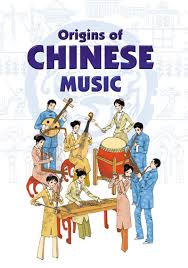
This blog post of mine is about the history of Chinese
musical instruments, and their importance to the Chinese people, and their
integral part in the culture of the Chinese. Furthermore, I hope that you will
also be able to appreciate the beauty of the Chinese musical instruments. Below
is my transcription (I edited some parts but they still convey the same
thoughts from the narrator or speaker) taken from the documentary presented by
the CCTV 9, shown in YouTube channel. I did this mainly for
educational purposes, and I do not intend to abuse the copyright, or
plagiarized someone’s work. The host of the New
Frontiers International is Mr. Ji
Xiaojun and is narrated by Su Yang.
---
History of Chinese Musical Instruments
Ancient Chinese regarded music as holy and pure and
believes that it purifies one’s thinking.
The harmonious combination of musical sounds was made by
instruments that fell into 8 categories
Namely metal, stone, clay, wood, bamboo,
string, gourd, and leather. The sounds that the instruments produce
gave expressions to the soul of Chinese people.
There is a traditional music revival in China. Maybe one
reason is that the old Chinese instruments look quaint to foreigners. Musicians
in ancient China use musical instruments that were quite different from now.Many
musical instruments are excavated as far
dates back as the Neolithic age.
One instrument is called Xun. You make it by shaping the clay and you baking it. A Xun has at most six holes on it. That
was the best Xun the ancient Chinese
had. They have 10 holes now, Xun.The sound is melancholy sad, still a Xun creates a unique artistic feeling.They produce sounds of clay. They produce inspiring
sounds that no instruments can produce.
Liu Kuanren, President China Xun Culture Society says that, “Tough conditions in primitive society people have to compete for
survival. They express emotions in many variety of ways. First form was
singing. Then they use clay, vines, bamboo and stones. These gave rise to
musical instruments. People who are still living in a tribal society uses musical
instruments that are ancient and stretches back to the Neolithic age
(primitive).”
Another instrument is the whistle, this bone
whistle is regarded as a musical instrument but in ancient time must be
used as a communication between hunters.
Next is, Pottery bell, when they sway
bells produce a sound that is clear and pleasant to the ear. While, Drums have bodies made of pottery
covered with animal skin. All of these are ancient musical instruments of
China. Another is chime stones, it is
also a Chinese musical instruments but originated from a simple farm tool. The chimes
resembles ancient stone plough and hoes, was actually designed for a stick. The
round whole by which a chime stone is hung
According to Ying Youqin, President of China’s Museum of Oriental Musical Instruments, “When
chime stones were fiund to be able to produce pleasant sound they gradually
became musical instruments. The ancient musical instruments has five notes are Gong, Shang, Jue , Zhi, and Yu.”
They are the equivalent
of the do, re, mi, in Western music.
According to Qian Jianzhong, former director of the music institute of China Art Academy. “The
Chinese mainly use five of the notes partly because they used five elements to
explain the origin of the world. Metal, wood, water, fire and earth or east
west north south and middle. So the
Chinese have five notes. Generally speaking we mainly use five of the seven
notes. That’s a rule. Two of the notes are secondary and the other five are
primary.”
This rule is in line with
the traditional, intellectual and cultural aspirations of Chinese people with
gentleness and tranquillity. Because of the use of these five notes the Chinese
traditional musical instruments were able to produce elegant music without
drastic rises of falls and pitch.
The earliest musical
instruments were quite rudimentary. By the time of Zhou dynasty as many as 70 different instruments were commonly
played. 8th century bc, the golden age. Confucius himself would later say that playing an instrument was an
important indicator of once moral standard. Many did not know that Confucius
was a musician.
Overtime the number of
musical instruments increased and they produce more objective sounds.
In the 8th
Century, Spring, and Autumn, and the Warring state war period. Musical
instruments developed rapidly in this period. According to Wang Peng, Qin Manufacturer.
“At first the Qin had five strings. Shun
a legendary sage monarch enjoyed making five-stringed plucked instruments based
on the notion of the 5 elements, metal, wood, water, fire and earth. Later when
King Wu of Zhou attacked King Zhou of Shang he added the E string to the
instrument to boost the morale of his troops. When King Wen of Zhou added a string
in commemoration of his son, the Qin gained its seventh string.”
As time passed the shape
of the Qin instrument becomes more
complex. The Qin can take many shapes
to accommodate its sound and rationality. For example there are Qins shaped like a banana leaf. Sunset
cloud-shaped Qins were produced on
the basis of imagined clouds.
The Qin is one of China’s most important instruments. One of the
requirements in playing the Qin was
to have good manners. In ancient China, Qin’s
were reserved for scholars before playing the Qin the musician was required to take a bow, and in playing the instrument the player was
to remain solemn and quiet. The Qin
is meant to rid those who play it of evil thoughts and help them cultivate the
mind and develop character.
The ancient city of Wuhan. Has a story about Yu Buoya he was an official who lived
in the State of Jin during the Spring and Autumn period. He was superb
at playing the Qin. Music brought him
and a woodcutter named Zhong Ziqi
together. The two are very best friends.When Yu’s friend died it was told that he broke his Qin and never played again.
In May 1978 excavation in
Hubei province was undertaken. The tomb’s occupant was a 5th century king,Zeng
Hou Yi. A set of chime bells was discovered. The 65 chime bells weigh 5
tons. The sounds of the chime bells allow us to appreciate the sound of the
ancient past.
According to Feng Guangsheng,
VP Hubei Art Vocational Institute.” The
bells unearther in Zeng Hou Yi’s tomb
produced transparent sounds like drops of water, and the sounds lingered,
amazing all of us present. It was wonderful. Theoretically, the bells can
produce monophonic or polyphonic sounds (simple or several sounds).”
The chime bells were
designed to demonstrate the grandeur of the palace. The bells produce a very
wide range of sound. They cover five octaves. The bass bells produced a
soul-stirring sound. This chime bells
also proved that the ancient Chinese can produce high quality bronze. They were
manufactured by 3 metals, bronze, tin and lead. Mixed in a proper ration. According
to Chen Zhongxing, a research fellow,
the proportion of tin, lead and bronze in the composition of bells was strictly
calculated. So the bells have the best possible pitch tone and color.
Chime bells were not the
only instruments found in Zeng’s
tomb. There were also chimes made of stones, a giant drum, and more musical
instruments, pan pipes as well as bamboo flutes. The chamber also contains
sacrificial vessels, and an array of table ware. Laid on, as if a banquet was about
to take place. This was in fact the king’s music center. We gain an idea of how
ancient Chinese music was performed. There were also lighter instruments found.
There are over 128 musical instruments in Zeng
Ho Yi’s tomb. It is believed there are at least 41 musicians needed to play
all these instruments. It is apparent that Zeng
Ho Yi was also a skilled musician himself.
The finest are the chime
bells among all the musical instruments in Zeng Ho Yi’s tomb. They were
predominant in the music of China.
---
Source:
New Frontiers International documentary CCTV 9.
Mga etiketa:
CCTV9,
China,
Chinese Music,
Confucius,
documentary,
drums,
Erhu,
Han,
history,
Instruments,
Ming,
New Frontiers International,
Pipa,
Qin,
Tang dynasty
Mag-subscribe sa:
Mga Post (Atom)